Harmandir Sahib Daily Hukamnama: Understanding the Tradition
How the day begins at Sri Harmandir Sahib: the palki procession from Sri Akal Takht Sahib, the Prakash of Sri Guru Granth Sahib Ji, the morning Hukamnama, and how a reading in Amritsar reaches Sikhs around the world.
Published Updated 5 min read

In this article
- A daily cycle of rest and awakening
- Night: Sukhasan and the journey to Sri Akal Takht Sahib
- Morning: the palki procession
- Prakash and the Hukamnama
- A history going back to 1604
- How the Hukamnama reaches the world
- Why this Hukamnama carries special weight
- Other Hukamnamas you may encounter
- Witnessing it in person
- Summary
Long before sunrise, while Amritsar's streets are still dark, the marble walkways around the sarovar at Sri Harmandir Sahib begin to fill. Devotees gather along the causeway and near Sri Akal Takht Sahib, waiting for the moment when Sri Guru Granth Sahib Ji is carried out for the day. Within the hour, a shabad will be read in the sanctum, and that shabad will travel, by broadcast, image and word of mouth, to Sikhs across the world.
This article follows that daily cycle and explains why the Hukamnama from Harmandir Sahib holds such a special place.
A daily cycle of rest and awakening
Sikhs treat Sri Guru Granth Sahib Ji not as a book but as the living Guru. Its daily routine therefore mirrors the respect shown to a revered person. The scripture is ceremonially "awakened" and installed each morning, a ceremony called Prakash, and respectfully closed and put to rest each night, called Sukhasan.
At Sri Harmandir Sahib, this cycle is observed with particular ceremony, because the saroop does not stay in the sanctum overnight.
Night: Sukhasan and the journey to Sri Akal Takht Sahib
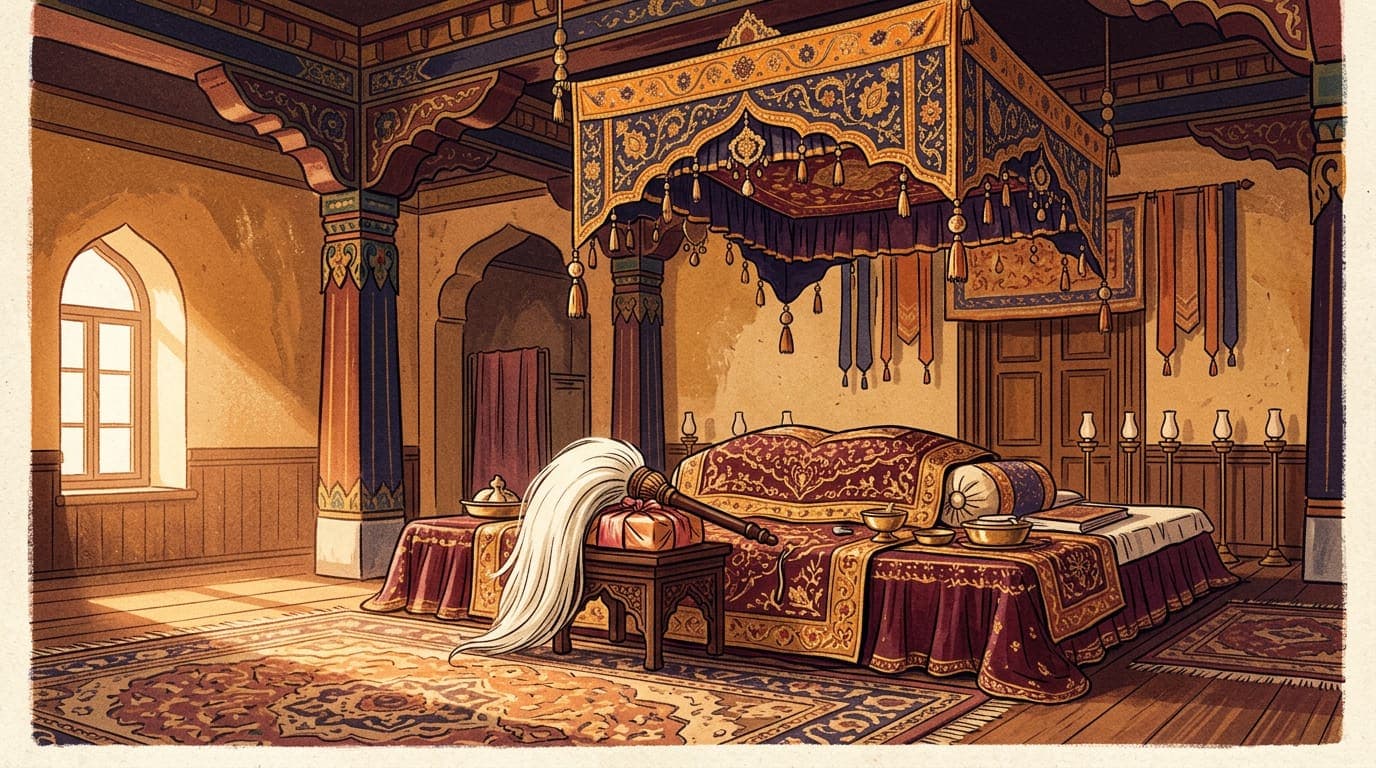
At the close of the day's programme, after the evening prayers and Ardas, Sri Guru Granth Sahib Ji is closed with the recitation of Kirtan Sohila and wrapped in rumalas (cloths). It is then placed in the Palki Sahib, an ornate palanquin, and carried by devotees across the causeway and around the sarovar to Sri Akal Takht Sahib. There it rests overnight in a room often called Kotha Sahib.
Taking a turn carrying the palki is regarded as a great privilege, and many people wait for the chance to put their shoulder to it for a few steps. Once the procession has passed, the sanctum is cleaned by sevadars (volunteers) in preparation for the next day.
Morning: the palki procession
In the early hours of the morning, the process is reversed. Sri Guru Granth Sahib Ji is carried in the Palki Sahib from Sri Akal Takht Sahib back to the sanctum, accompanied by the singing of Gurbani, the waving of the chaur (a whisk that is a traditional sign of sovereignty and respect) and the sound of the sangat reciting "Waheguru".
The procession crosses through the Darshani Deori, the ornate gateway at the head of the causeway, and moves slowly along the causeway to the sanctum. Petals are often scattered along the way.
Prakash and the Hukamnama
Inside the sanctum, Sri Guru Granth Sahib Ji is installed on its seat beneath a canopy. Ardas is offered, and the granthi (the officiant who reads from the scripture) opens it at random. The first shabad on the left-hand page is read as the day's Hukamnama, following the procedure in the Sikh Rehat Maryada. Our guide Mukhwak and Hukamnama explains the steps.
This morning reading is the one Sikhs everywhere call "today's Hukamnama from Darbar Sahib". The kirtan that continues through the day at Harmandir Sahib then begins in earnest, starting with the early-morning Asa di Var.
A history going back to 1604
The daily reading at Harmandir Sahib began with the installation of the Adi Granth, the scripture compiled by Guru Arjan Dev Ji, in the newly completed Harmandir Sahib in 1604. Baba Buddha Ji, a revered elder who had known Guru Nanak Dev Ji, was appointed the first granthi. In 1708 Guru Gobind Singh Ji conferred Guruship on the scripture, and from then on it was honoured as the living Guru, Sri Guru Granth Sahib Ji.
The practice continued through the upheavals of the eighteenth century, when Harmandir Sahib was repeatedly attacked and rebuilt, and through the changes of the colonial period. Since the 1920s, the shrine has been managed by the Shiromani Gurdwara Parbandhak Committee (SGPC), which appoints its granthis and ragis. Our article on the Golden Temple's history and architecture tells that longer story.
How the Hukamnama reaches the world
For centuries, the day's Hukamnama was known mainly to those present. Pilgrims carried news of it home, and it was written up for display at the complex. Over the twentieth century, Punjabi newspapers began to print the day's Hukamnama, and it became part of the morning read in many homes.
The spread accelerated with broadcasting and the internet:
- Television. From the late 1990s, the SGPC granted rights to television channels to broadcast Gurbani from Harmandir Sahib, and the morning Hukamnama became a fixture of Punjabi television.
- The SGPC's own publication. The SGPC publishes the Hukamnama daily, usually as an image or PDF with a Punjabi explanation.
- The SGPC's own channel. Since July 2023, the SGPC has broadcast Gurbani, including the morning Hukamnama, on its own web and YouTube channel.
- Messaging apps. Images of the day's Hukamnama are forwarded within minutes across family and community groups.
This speed brings a responsibility to check that what is shared is authentic and current. Our page on where to find today's Hukamnama lists the official sources.
Why this Hukamnama carries special weight
Every gurdwara takes its own Hukamnama, and each is equally the Guru's word for its sangat. The reading from Sri Harmandir Sahib is not a higher kind of Hukamnama. Its special place comes from the shrine itself:
- It is the site where the Adi Granth was first installed.
- It stands beside Sri Akal Takht Sahib, the highest seat of Sikh temporal authority.
- It is the most visited Sikh shrine and a focus of devotion for the entire Panth.
Reading the same shabad as the sangat in Amritsar gives Sikhs scattered across the world a shared starting point for the day.
Other Hukamnamas you may encounter
- Your local gurdwara's Hukamnama, taken at its own morning Prakash.
- Hukamnamas from the Takhts, such as Takht Sri Hazur Sahib or Takht Sri Patna Sahib, which some sangats follow.
- Hukamnamas taken at family occasions, such as weddings and naming ceremonies.
None of these conflicts with the others. Many Sikhs read their gurdwara's Hukamnama and the one from Harmandir Sahib.
Witnessing it in person
For many visitors, attending the early-morning palki procession and Prakash is the most moving experience of a visit to Amritsar. A few suggestions:
- Arrive early. Plan to be at the complex well before dawn.
- Stand respectfully along the route and let those carrying the palki pass.
- Expect crowds on weekends, Sangrand, Puranmashi and Gurpurabs.
- Photography is not allowed inside the sanctum.
- Stay for Asa di Var, sung after the Prakash.
Our guide to visiting Harmandir Sahib covers practical matters in more detail.
Summary
Each day at Sri Harmandir Sahib follows a cycle that has continued since 1604. Sri Guru Granth Sahib Ji rests at Sri Akal Takht Sahib overnight, returns to the sanctum in the Palki Sahib before dawn, and is opened for the Prakash, after which the day's Hukamnama is read. From that moment the shabad travels outwards to Sikhs everywhere. Understanding the ceremony behind it adds depth to the simple act of reading "today's Hukamnama".
Frequently asked questions
Where is Sri Guru Granth Sahib Ji kept at night at Harmandir Sahib?
After the Sukhasan ceremony at night, Sri Guru Granth Sahib Ji is carried in the Palki Sahib from the sanctum to a room at Sri Akal Takht Sahib, often called Kotha Sahib, where it rests until the morning procession.
Can visitors watch the morning Hukamnama at Harmandir Sahib?
Yes. The complex is open to everyone. The palki procession and Prakash take place in the early hours, so visitors should arrive well before dawn and be prepared for crowds, especially on weekends and Gurpurabs. Timings vary by season.
Is the Harmandir Sahib Hukamnama different from my gurdwara's Hukamnama?
Usually, yes. Every gurdwara takes its own Hukamnama by opening Sri Guru Granth Sahib Ji, so the shabad differs. Many Sikhs read both: their own gurdwara's and the one from Sri Harmandir Sahib.